

Chemik organik, adiunkt na Wydziale Chemii Uniwersytetu Wrocławskiego. Konstruuje peptydy i bada je różnymi wyrafinowanymi metodami. Wprowadza studentów w tajniki metod chromatograficznych, elektroforezy kapilarnej i chemii kryminalistycznej. Pracuje z wysokimi ciśnieniami, wysokimi napięciami i widmami masowymi, a dla przyjemności wyszukuje memy chemiczne i obserwuje ptaki.

Woli psy od kotów, gruszki od jabłek i herbatę od kawy. Każdą napotkaną rzecz traktuje jak potencjalny temat wykładu, obiekt badań do prac licencjackich lub historię czekającą na opowiedzenie. Stara się nie używać przykładów z Lema i Pratchetta w czasie zajęć ze studentami, odreagowuje to podczas Dolnośląskiego Festiwalu Nauki i Dni Fantastyki.
Publikacje
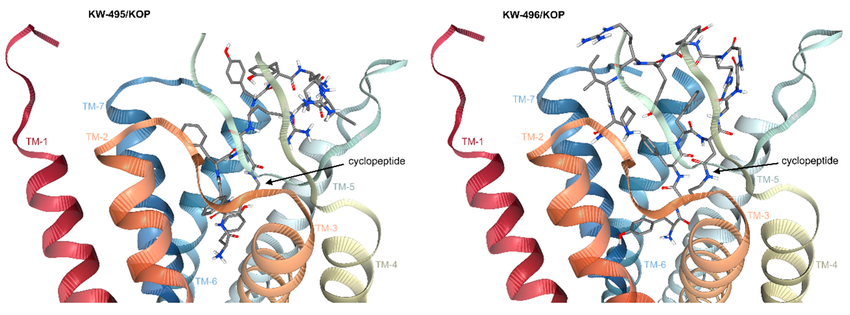
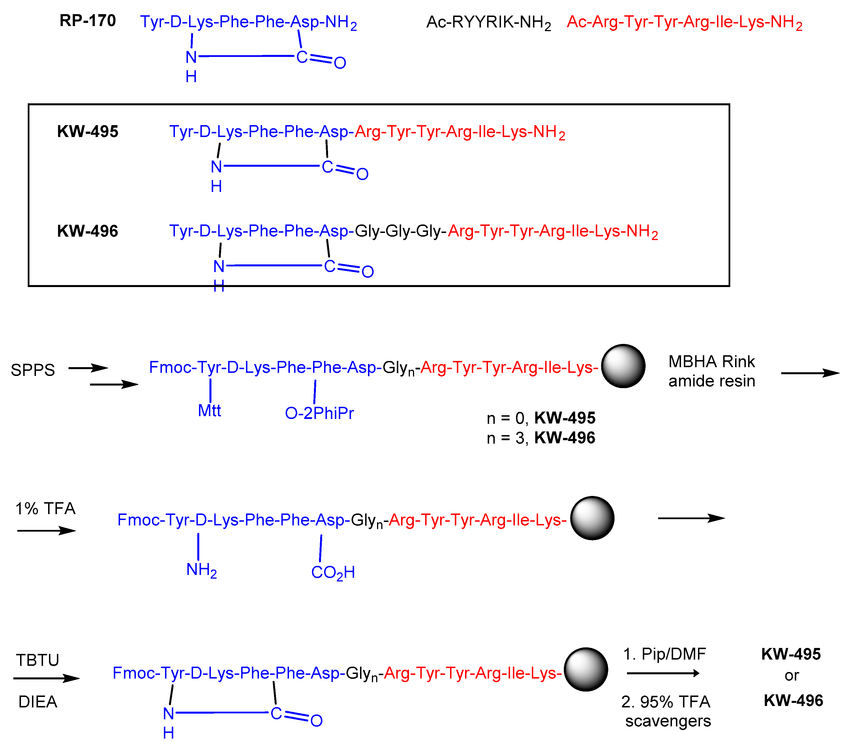
Synthesis, Biological Activity and Molecular Docking of Chimeric Peptides Targeting Opioid and NOP Receptors
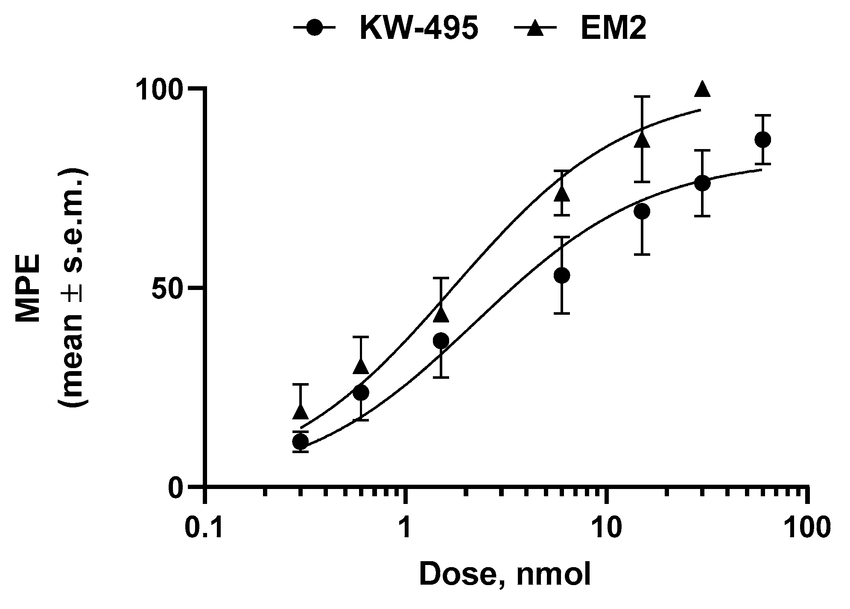
„Recently, mixed opioid/NOP agonists came to the spotlight for their favorable functional profiles and promising outcomes in clinical trials as novel analgesics. This study reports on two novel chimeric peptides incorporating the fragment Tyr-c[D-Lys-Phe-Phe]Asp-NH2 (RP-170), a cyclic peptide with high affinity for µ and κ opioid receptors (or MOP and KOP, respectively), conjugated with the peptide Ac-RYYRIK-NH2, a known ligand of the nociceptin/orphanin FQ receptor (NOP), yielding RP-170-RYYRIK-NH2 (KW-495) and RP-170-Gly3-RYYRIK-NH2 (KW-496). In vitro, the chimeric KW-496 gained affinity for KOP, hence becoming a dual KOP/MOP agonist, while KW-495 behaved as a mixed MOP/NOP agonist with low nM affinity.
Hence, KW-495 was selected for further in vivo experiments. Intrathecal administration of this peptide in mice elicited antinociceptive effects in the hot-plate test; this action was sensitive to both the universal opioid receptor antagonist naloxone and the selective NOP antagonist SB-612111. The rotarod test revealed that KW-495 administration did not alter the mice motor coordination performance. Computational studies have been conducted on the two chimeras to investigate the structural determinants at the basis of the experimental activities, including any role of the Gly3 spacer.„
Praca dostępna wyłącznie w języku angielskim!
Aby przeczytać całość <Kliknij tutaj>
Two is better than one: Deuterium in analytical mass spectrometry
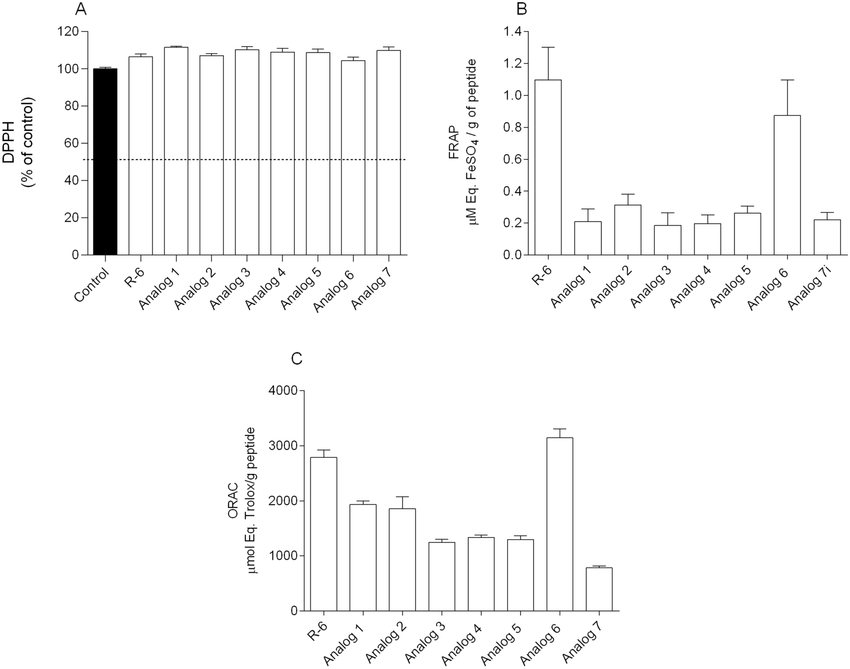
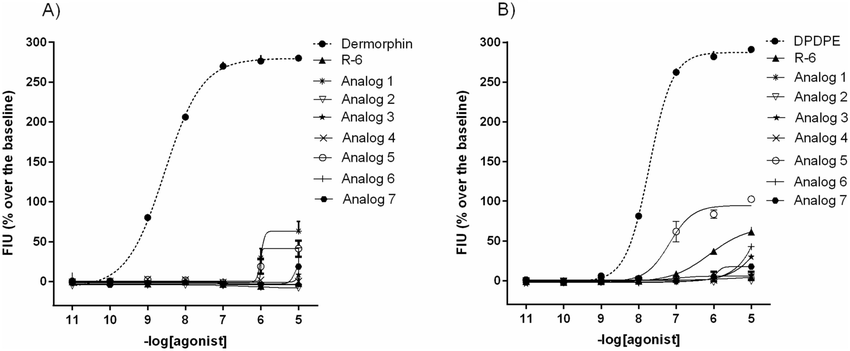
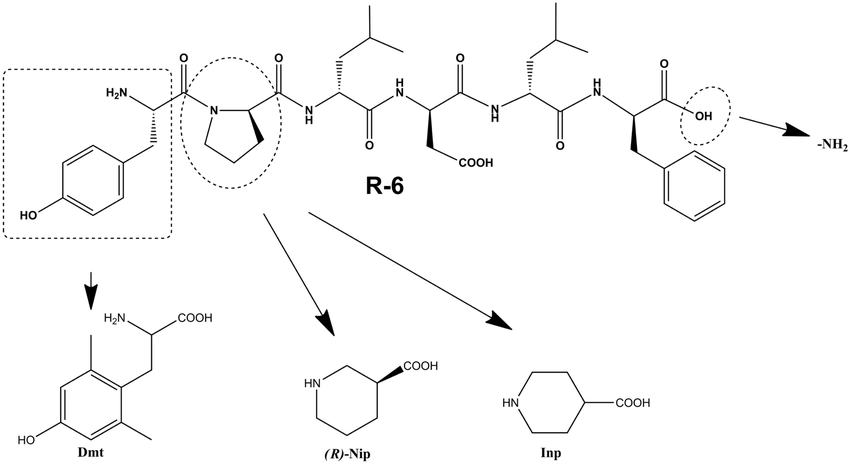
„Naturally occurring peptides, such as rubiscolins derived from spinach leaves, have been shown to possess some interesting activities. They exerted central effects, such as antinociception, memory consolidation and anxiolytic-like activity. The fact that rubiscolins are potent even when given orally makes them very promising drug candidates. The present work tested whether rubiscolin-6 (R-6, Tyr-Pro-Leu-Asp-Leu-Phe) analogs have neuroprotective and anti-inflammatory effects. These hypotheses were tested in the 6-hydroxydopamine (6-OHDA) injury model of human neuroblastoma SH-SY5Y and lipopolysaccharide (LPS)-stimulated RAW 264.7 macrophages. The determination of reactive oxygen species (ROS), mitochondrial membrane potential (MMP), Caspase-3 activity, lipid peroxidation and nitric oxide (NO) production allowed us to determine the effects of peptides on hallmarks related to Parkinson’s Disease (PD) and inflammation. Additionally, we investigated the impact of R-6 analogs on serine-threonine kinase (also known as protein kinase B, AKT) and
mammalian target of rapamycin (mTOR) activation. The treatment with analogs 3 (Tyr-Inp-Leu-Asp-Leu-Phe-OH), 5 (Dmt-Inp-Leu-Asp-Leu-Phe-OH) and 7 (Tyr-Inp-Leu-Asp-Leu-Phe-NH2) most effectively prevented neuronal death via attenuation of ROS, mitochondrial dysfunction and Caspase-3 activity. Peptides 5 and 7 significantly increased the protein expression of the phosphorylated-AKT (p-AKT) and phosphorylated-mTOR (p-mTOR). Additionally, selected analogs could also ameliorate LPS-mediated inflammation in macrophages via inhibition of intracellular generation of ROS and NO production. Our findings suggest that R-6 analogs exert protective effects, possibly related to an anti-oxidation mechanism in in vitro model of PD. The data shows that the most potent peptides can inhibit 6-OHDA injury by activating the PI3-K/AKT/mTOR pathway, thus playing a neuroprotective role and may provide a rational and robust approach in the design of new therapeutics or even functional foods.”
Praca dostępna wyłącznie w języku angielskim!
Aby przeczytać całość <Kliknij tutaj>

Gościni bloku nauka
W Bloku Naukowym skupimy się na fascynujących aspektach nauki i technologii. Specjalnie dla Was o swoich dziedzinach opowiedzą naukowcy z najlepszych polskich uczelni. Poszukamy odpowiedzi na pytanie czy nauka i magia mają ze sobą coś wspólnego i obejrzymy mikroskopijny świat, o którego istnieniu nie mieliśmy nawet pojęcia.